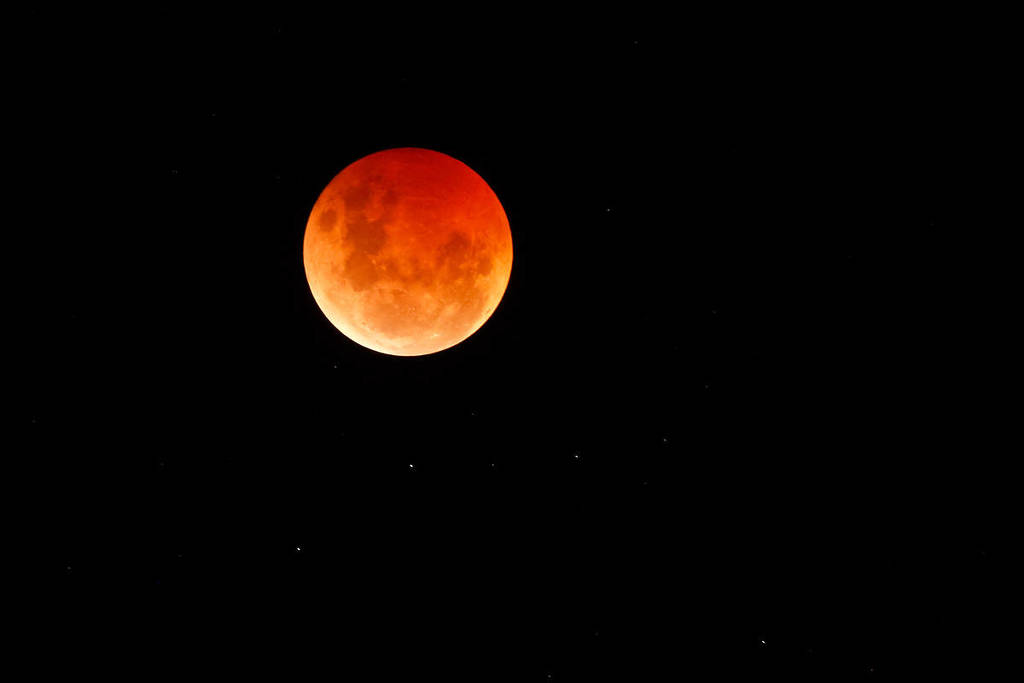
Aussies are in for a treat with a stunning Blood Moon rising in our skies on the night of September 7 to September 8 for the second total lunar eclipse of 2025. The celestial event will be visible from Europe, Asia, New Zealand, and Australia, so we’re truly getting a front row seat to one of the coolest astronomical phenomena of the year! Read on to find out more about what makes is so special and the best places to bask in it.
What is a Blood Moon?
As mentioned above, a Blood Moon is a total lunar eclipse, which happens when the Earth moves directly between the Sun and the Moon, casting a shadow on the lunar surface. During this phenomenon, the Moon takes on a red colour because the Earth’s atmosphere filters and bends sunlight, scattering shorter blue wavelengths and allowing the longer red wavelengths to pass through and illuminate the Moon, giving it a reddish glow. This astronomical event usually happens twice a year, but can occur up to four times.
This year we got extra lucky, not just because Australia will be one of the best places to see it, but also because this upcoming Blood Moon will be the longest one in seven years, with the total eclipse — when the Blood Moon is at its most spectacular — lasting a little over an hour: 82 minutes, approximately.
When to see the Blood Moon
The eclipse will start as early as 1:28am on September 8 but, for the full effect, we recommend watching during the total eclipse phase, which will happen between 3:30am and 4:52am, when the Moon will be at its reddest and most breathtaking.
We don’t know when the next Blood Moon will happen at this point, so this is truly not to be missed!
Where to see the Blood Moon?
You should be able to see this extraordinary Moon from almost anywhere, but it might be a bit trickier than usual if it’s cloudy and, of course, the further you get from the city, the more you’ll appreciate its glow.
When are the next supermoons?
We may not know when the next Blood Moon is coming, but we still have this year’s supermoons, which will rise on the following dates, to look forward to:
- October 7 — Hunter’s Moon
- November 5 — Beaver Moon
- December 4 — Cold Moon