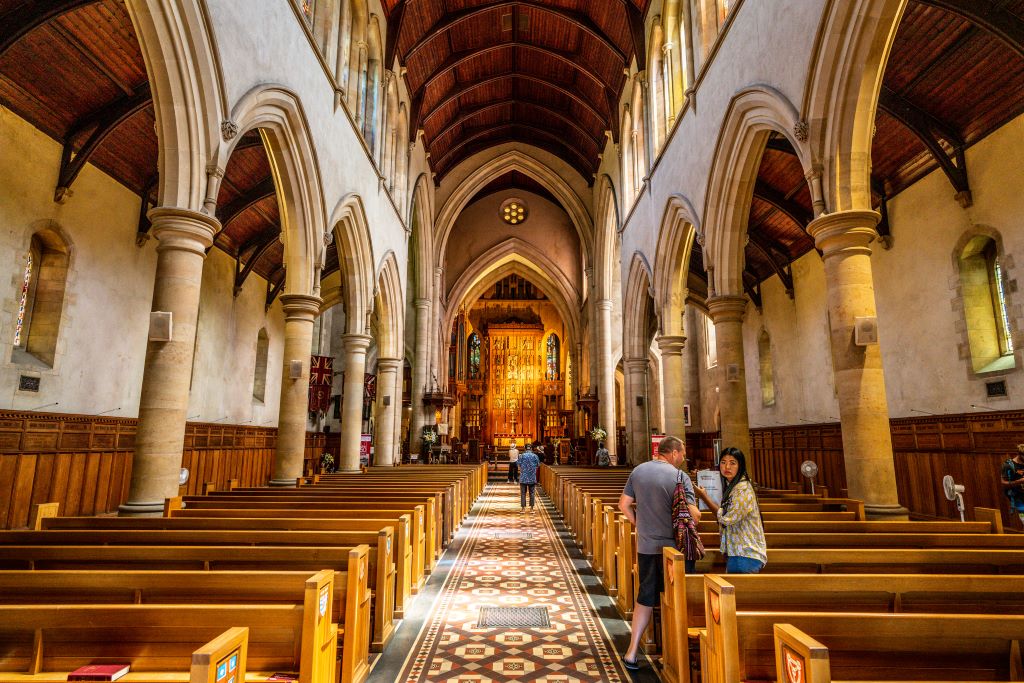
Adelaide, long before you had a skyline, traffic, or chicken salt, there were open fields and grazing sheep. Hard to believe when you see O’Connell Street now, right? But, within those fields, a foundation was quietly laid. Since 1869, Adelaide’s very own Notre Dame—better known as St Peter’s Cathedral—has stood there, bathed in golden light and watching the city rise around it.
It’s one of Adelaide’s most striking landmarks, yet few know why this European-style masterpiece ended up in originally built in pasture, far from the city centre.
This is the story of St Peter’s Cathedral—and why it’s more interesting than merely a church.
Interesting for… history bums
It was meant to rise in Victoria Square—until ambition met the politics of a newly colonised city. The land, reserved by Governor Hindmarsh for public use, sparked one of Adelaide’s first legal battles over church and civic space. The court ruled: the square belonged to the people, not the pulpit.
So, the Anglicans looked elsewhere—to a cow paddock in North Adelaide, overlooking the river. Not the centre of town, but close enough. And fitting, for a city that’s always done things its own way.
Interesting for… architecture enthusiasts
Built in the Gothic Revival style, it rose with dramatic twin towers and a 50-metre central spire, giving Adelaide one of its most recognisable silhouettes. What sets it apart is its rare blend of materials—locally quarried sandstone from Glen Osmond and Tea Tree Gully, paired with imported stone from Sydney and New Zealand. The result is a golden, textured exterior that glows in the Adelaide light.
Interesting for… music heads
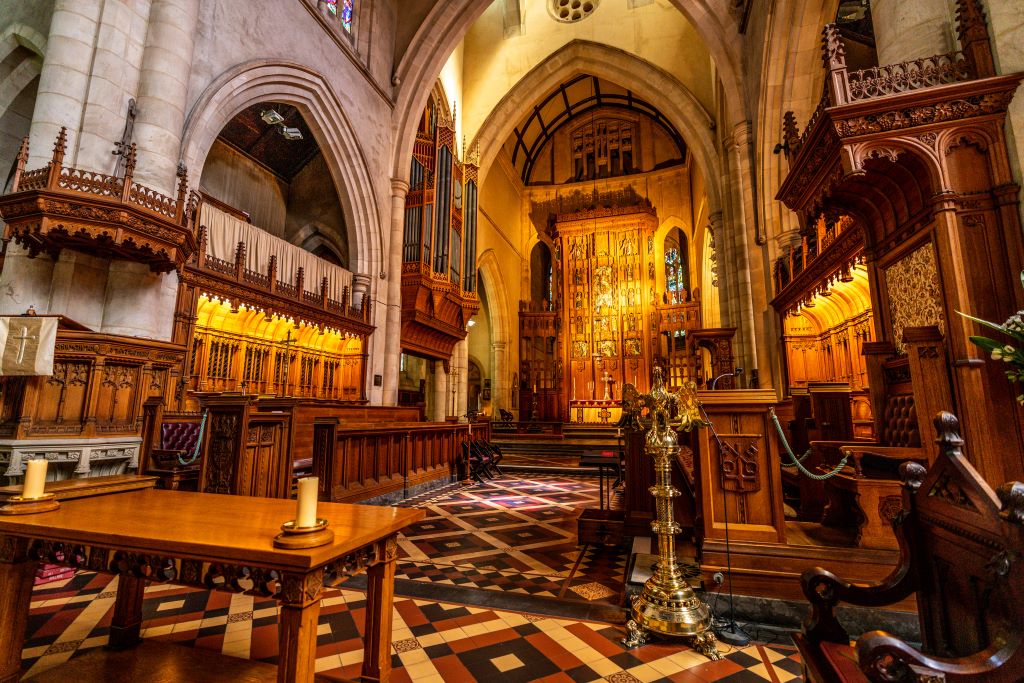
Inside, it was built for sound. The timber ceilings and wide stone nave carry music in a way that’s hard to explain until you’re standing there. Overhead, the cathedral holds South Australia’s heaviest ring of eight bells—the second-heaviest in the Southern Hemisphere. Now, under the glow of a hundred flickering candles, the cathedral is now a host of the globally renowned Candlelight concerts.